Hardwood Floor Gaps in Winter: Why They Open and When to Worry
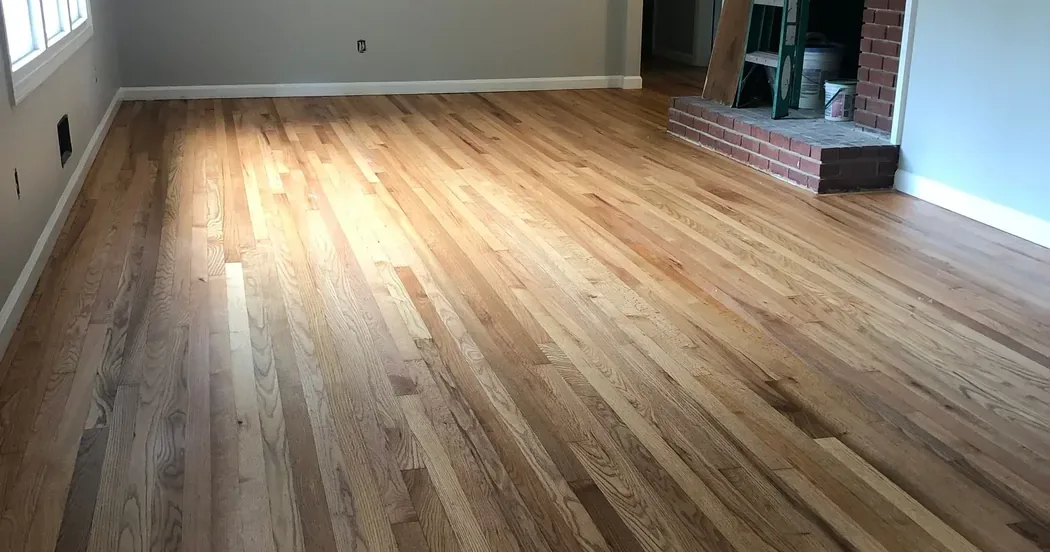
Gaps between hardwood boards in winter are normal in most Toronto homes. Why they open, how a humidifier helps, and when a gap needs repair.
Gaps between hardwood boards in winter are normal in most Toronto homes. The heating season dries out the indoor air, the wood gives up moisture and shrinks across its width, and thin gaps open between the boards. They close again when the humid weather returns, usually by early summer.
Key takeaways
- A common recommended range for hardwood floors is 30 to 50 percent indoor humidity, but the flooring manufacturer’s instructions set the requirements for your floor. A heated Toronto house in January often sits well below that.
- Narrow winter gaps on strip hardwood are usually seasonal movement, not a failed install. The real test is whether they shrink or close when the humidity comes back up.
- A humidifier and a small humidity reader are the fix for seasonal gaps. Wood filler is not.
- Gaps that stay open through summer and boards that cup or lift point to a different problem. Gaps beside a heat source may warrant a closer look.
Why do hardwood floors gap in winter?
Hardwood gaps in winter because the boards lose moisture and shrink. Wood takes on and gives up water to match the air around it. Cold outdoor air holds very little moisture, and once the furnace heats it, the relative humidity inside drops sharply. In a heated house without humidity control, indoor humidity can fall into the 20 percent range in January and February.
Each board shrinks a fraction of a millimetre across its width. Across a room, those fractions add up to visible lines between the boards.
Summer reverses it. Humid Toronto summers push moisture back into the wood, the boards swell, and the gaps close. The floor is behaving exactly as wood is meant to.
Is a gap between floorboards normal?
Yes, within limits. On 2 1/4 inch strip oak, the floor under a lot of older Toronto houses, narrow winter gaps are normal, and some approach the thickness of a dime. Width alone does not settle it. The more reliable test is whether the gaps shrink or close when indoor humidity rises. Wide boards move more than narrow ones, so a 5 inch plank floor shows wider seasonal gaps than strip flooring in the same house. Engineered hardwood moves much less than solid, because its layered core resists swelling and shrinking.
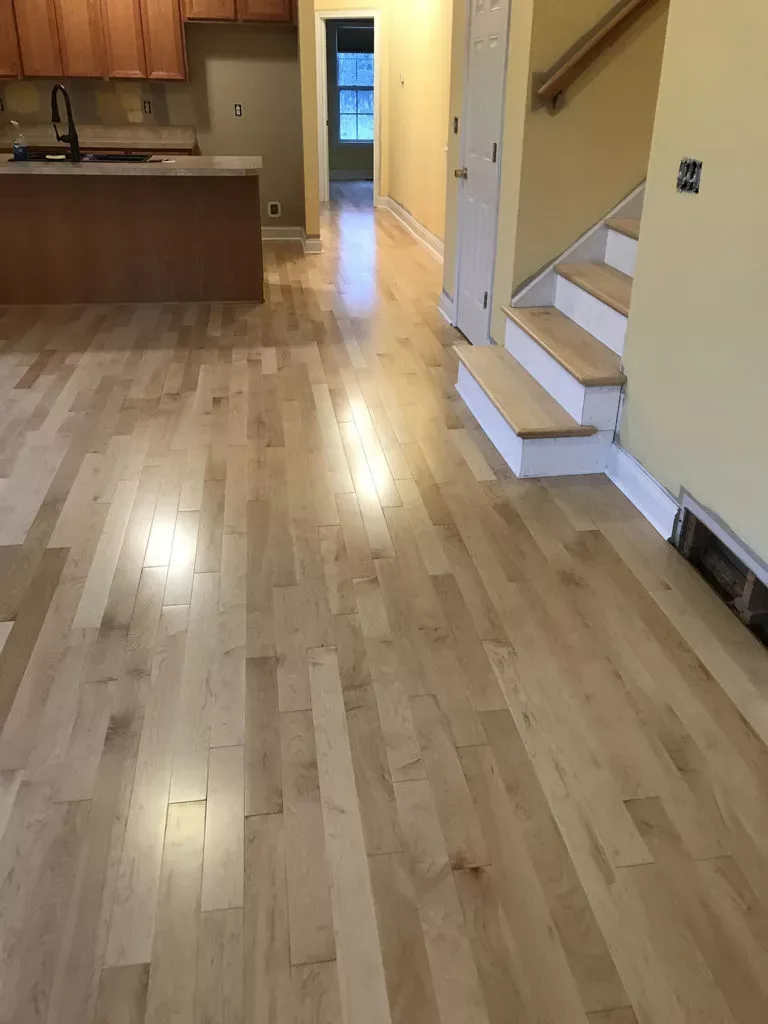
The pattern tells you more than the width. Seasonal gaps usually spread across the room. When a few joints open wide while the boards around them stay tight, the finish has often glued neighbouring boards together, a condition called sidebonding, which concentrates normal shrinkage into fewer, wider gaps. Gaps that open wide beside a heat register, or along one line of the floor, can also have a local cause.
How do you get moisture back into wood floors?
You put moisture back into the air, and the floor follows it. A humidifier on the furnace treats the whole house; room humidifiers work in the rooms with wood floors. Add a hygrometer, a small digital humidity reader, and keep those rooms between 30 and 50 percent.
On the coldest days, stay at the lower end of that range. Very humid indoor air on a bitterly cold day condenses on the inside of the windows, and wet sills and frames are a problem of their own. If the glass starts to fog or drip, turn the humidifier down a step.
Give it a few weeks. Wood comes back into balance with the air slowly, so the gaps close gradually.
What should you not do about winter gaps?
Do not fill seasonal gaps with wood filler or putty. When the boards swell in summer they squeeze the filler up out of the joints or crush the board edges, and the floor ends up worse than before.
Also avoid:
- Wet mopping or steam cleaning. Water sits in open gaps and soaks into the board edges. Use a well-wrung mop or a cleaner made for finished hardwood.
- Pushing the humidity too high to close the gaps fast. Too much moisture swings the floor the other way, and over-wet boards cup.
- Refinishing to hide seasonal gaps. Sanding and refinishing does not correct normal seasonal shrinkage, and some finishes bond neighbouring boards together and push the movement into fewer, larger gaps. Before we recommend a refinish, we check indoor humidity, the moisture in the wood and the condition of the floor. With those in range, refinishing can be done at any time of year.
When are hardwood gaps not normal?
Gaps signal a different problem when they stay open in July and August, or when the boards cup or lift. Gaps that open only around a heat source may warrant a closer look. These are the common causes:
- Gaps that never close. The boards were laid before they had adjusted to the house, or they are moving on a loose subfloor.
- Cupping or lifting, where the edges of each board sit higher than the middle. Cupping points to a moisture imbalance, often moisture beneath the floor from a damp basement, a leak or a crawlspace, though some engineered floors cup from very dry air. An inspection finds the cause, and the cause gets fixed before anything is done to the boards.
- Gaps beside a heat register, a radiator or over in-floor heating. That is usually local winter drying rather than a defect. Solid hardwood over a heat source goes through the shrink and swell cycle harder than the rest of the floor, which is why we steer people with heated floors toward engineered.
- Cracks along the face of a board, rather than between boards. Very dry air is splitting the wood itself.
If you see any of these, book a look before winter ends. The gaps are at their widest now, which makes them easy to measure.
How are permanent gaps fixed?
Permanent gaps need their cause found before they are repaired, because a repair that ignores the cause can open up again. Small, stable gaps can take a compatible filler. Larger gaps need matching wood slivers glued into the joints, or the affected boards lifted and replaced with matched stock. We price repairs per damaged area once we have seen them, and a photo is enough to start.
If the repair leaves a colour difference, sanding and refinishing the surrounding floor usually blends it in. Refinishing runs $4 to $8 per square foot. That is the price of the refinish itself, not the total cost of correcting the gaps, which depends on the repair.
Hardwood gaps in winter: common questions
Do engineered hardwood floors gap in winter?
Less than solid hardwood. The layered core resists movement, so engineered floors show smaller seasonal gaps. That stability is why we install engineered over concrete slabs and heated floors.
Does a wood floor expand in summer or winter?
Summer. Wood swells when it takes in moisture from humid air and shrinks in dry winter air, so floors are at their tightest in July and August.
Will winter gaps close on their own?
Yes, in most homes. Seasonal gaps close as indoor humidity climbs in spring. A humidifier through the winter keeps them smaller in the meantime.
Not sure if your gaps are seasonal?
If your gaps are still open in summer, or the boards have started to cup or lift, Ontario Flooring Contractors can take a look. Send a photo through our hardwood floor repair page and we will tell you whether it is seasonal movement or a repair, before you spend anything.